Gazebo Ceiling Fan and String Light Installation Done Right
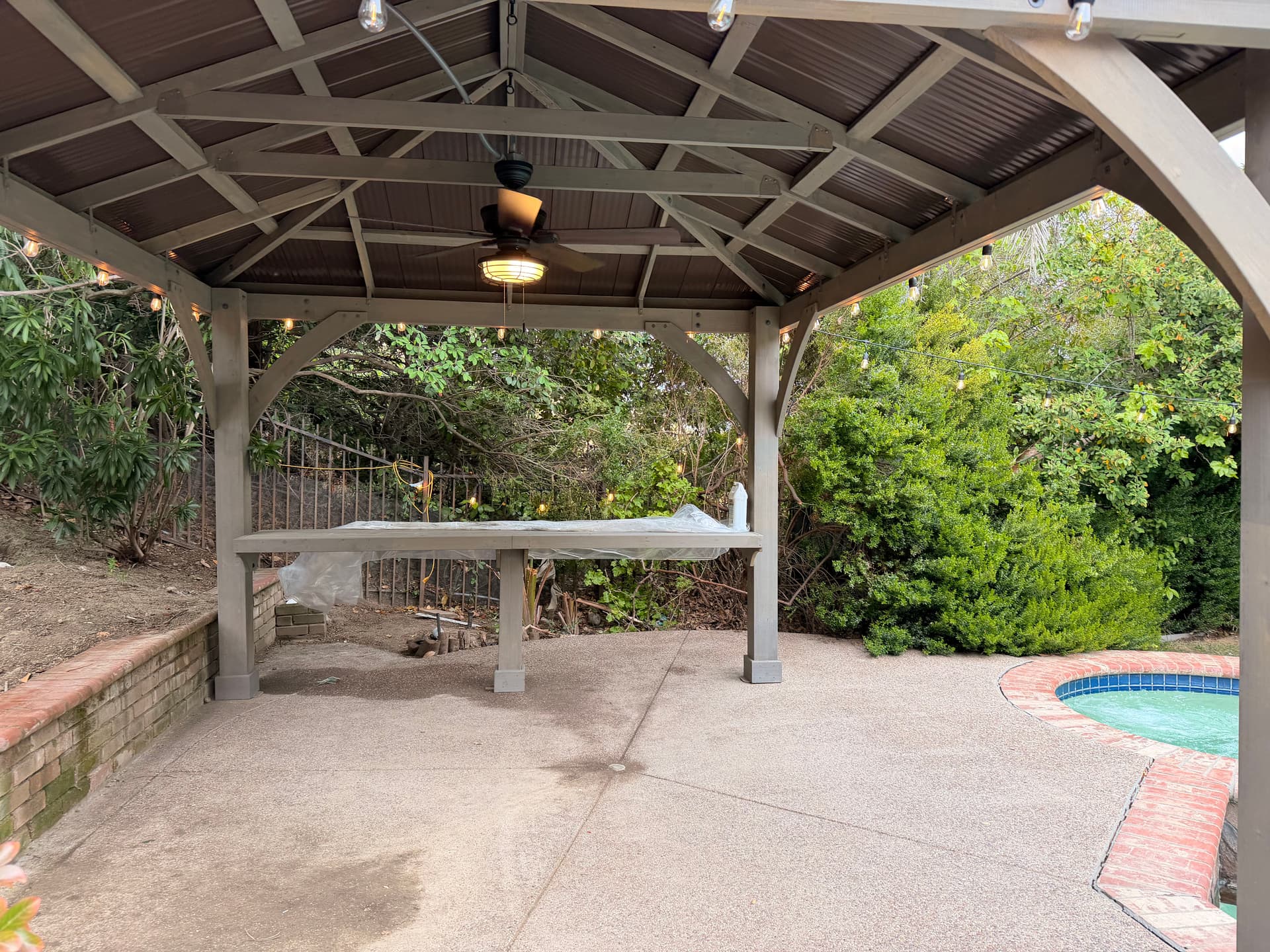
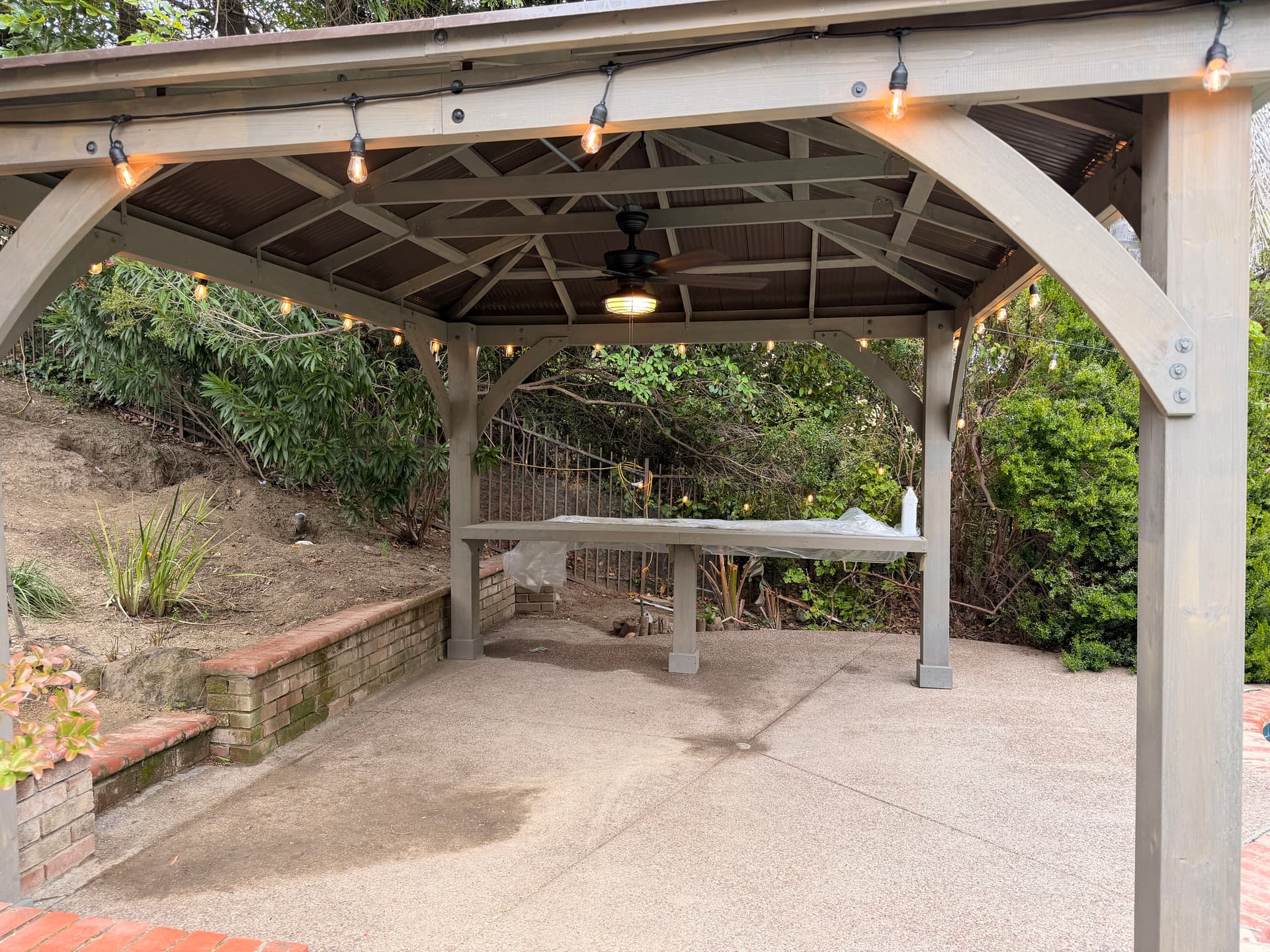
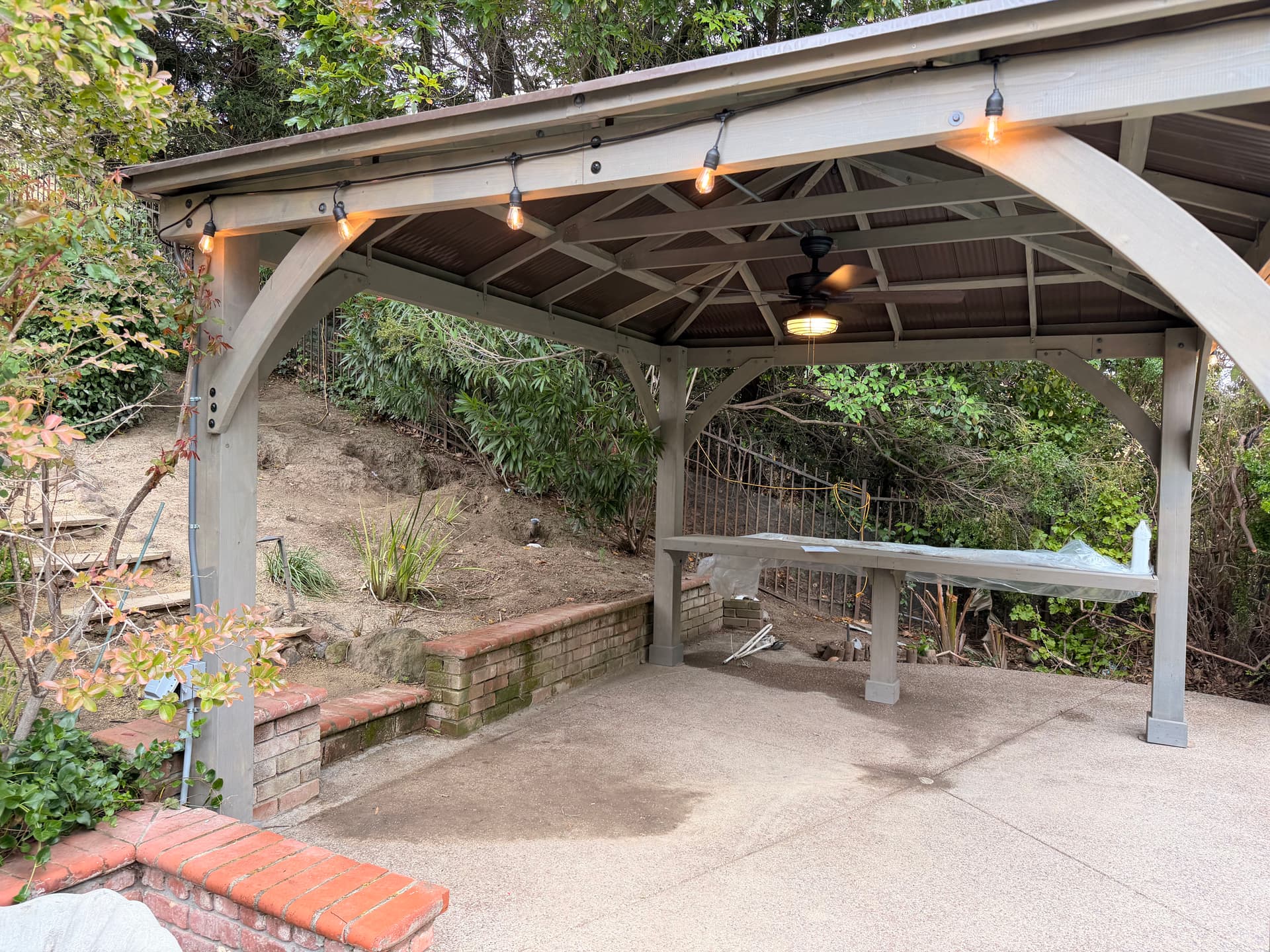
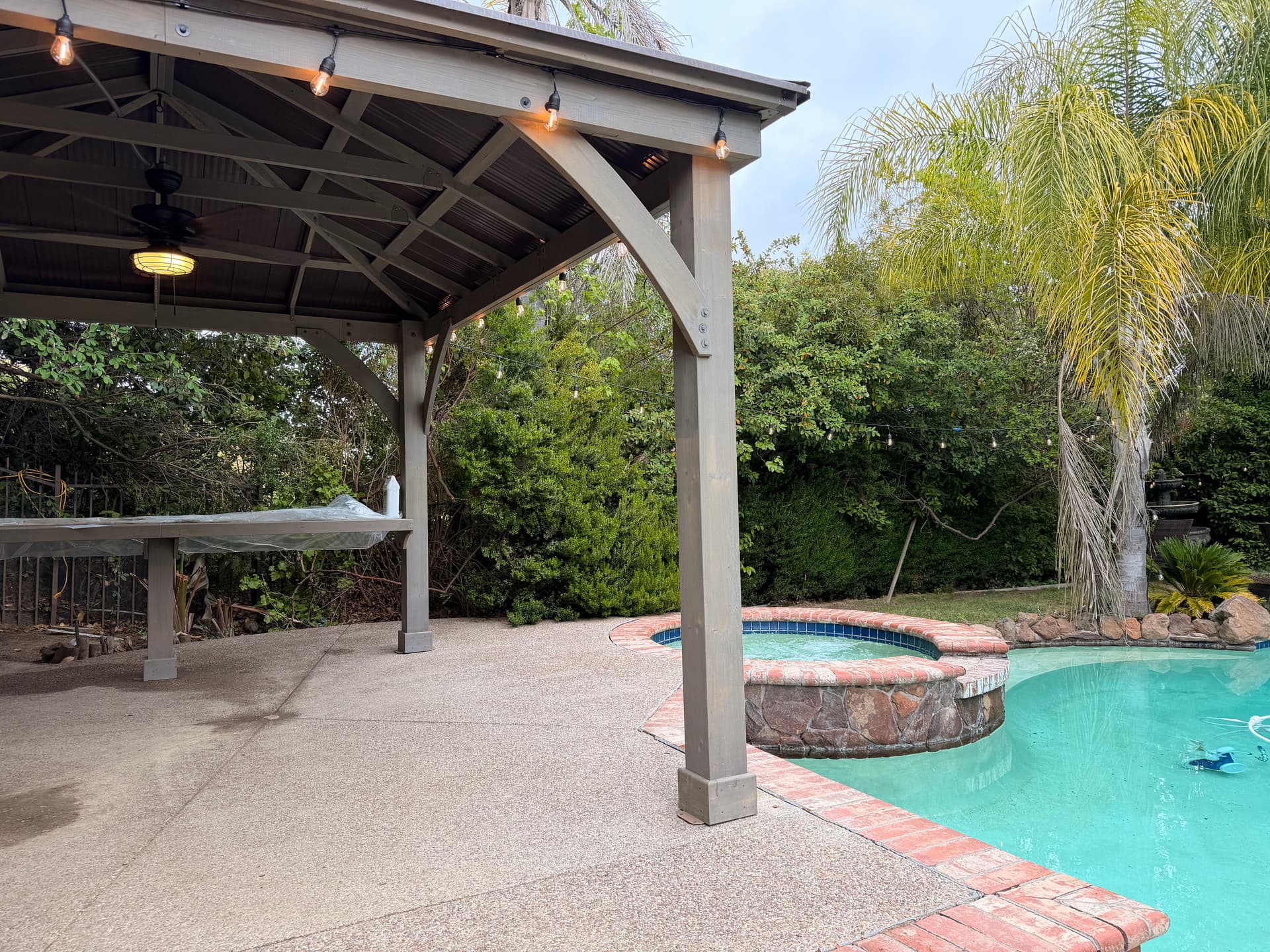
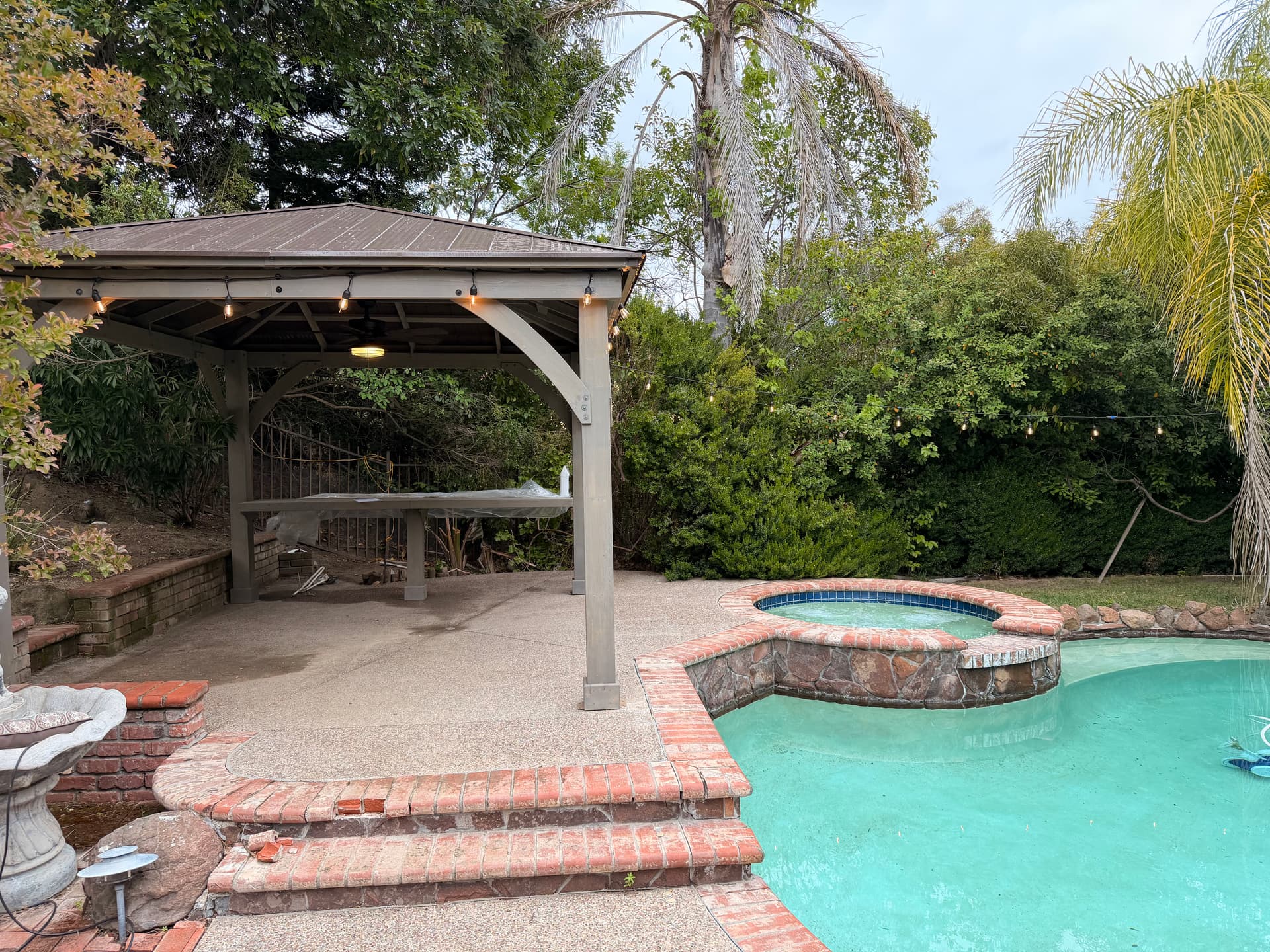
A covered gazebo next to a pool is a great setup - but without the right electrical work, it just sits there. No airflow. No ambiance after dark. That's exactly what we were working with here. A beautiful wood-framed gazebo with a metal roof, plenty of potential, and zero fixtures to make it usable once the sun went down.
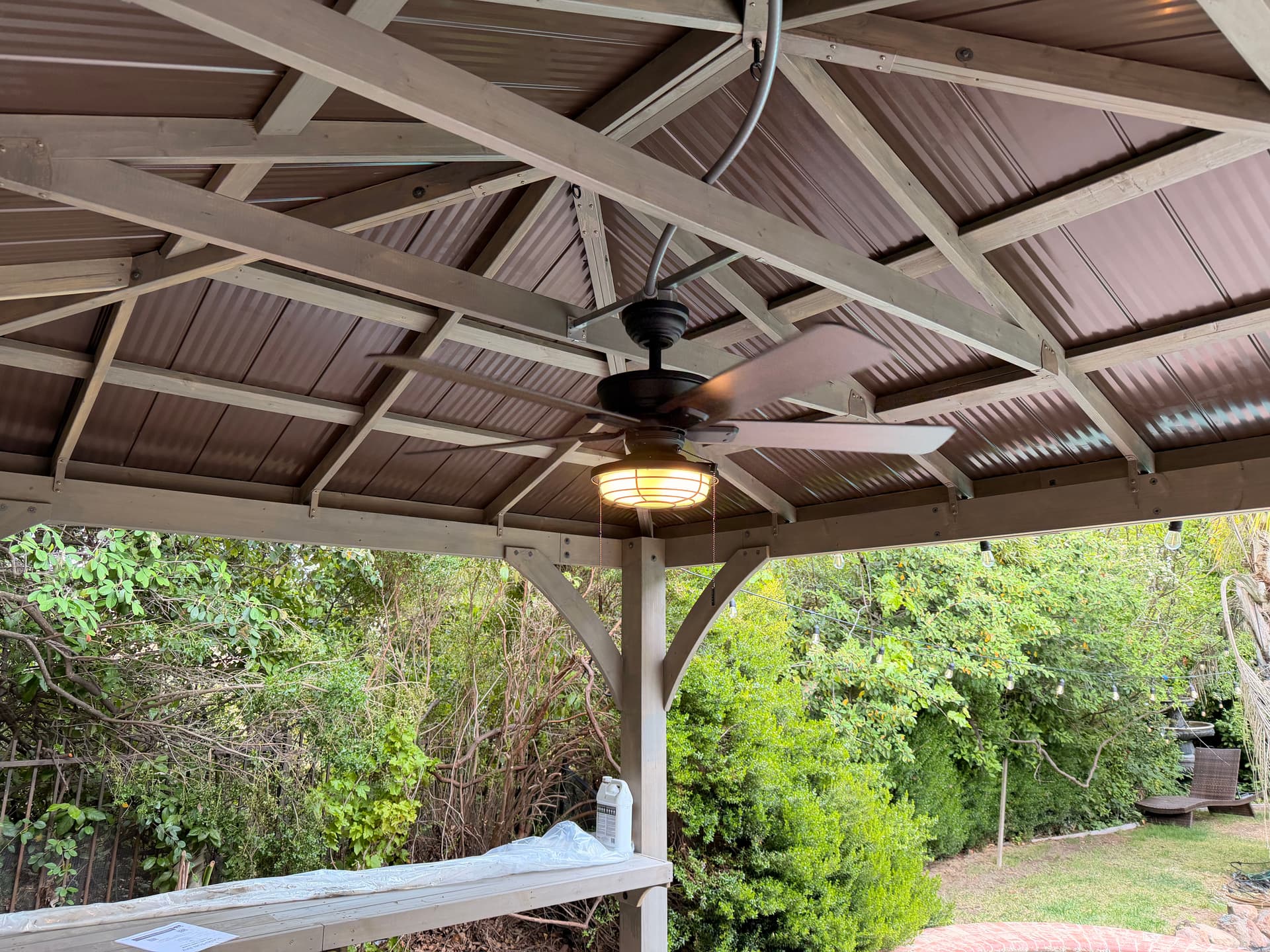
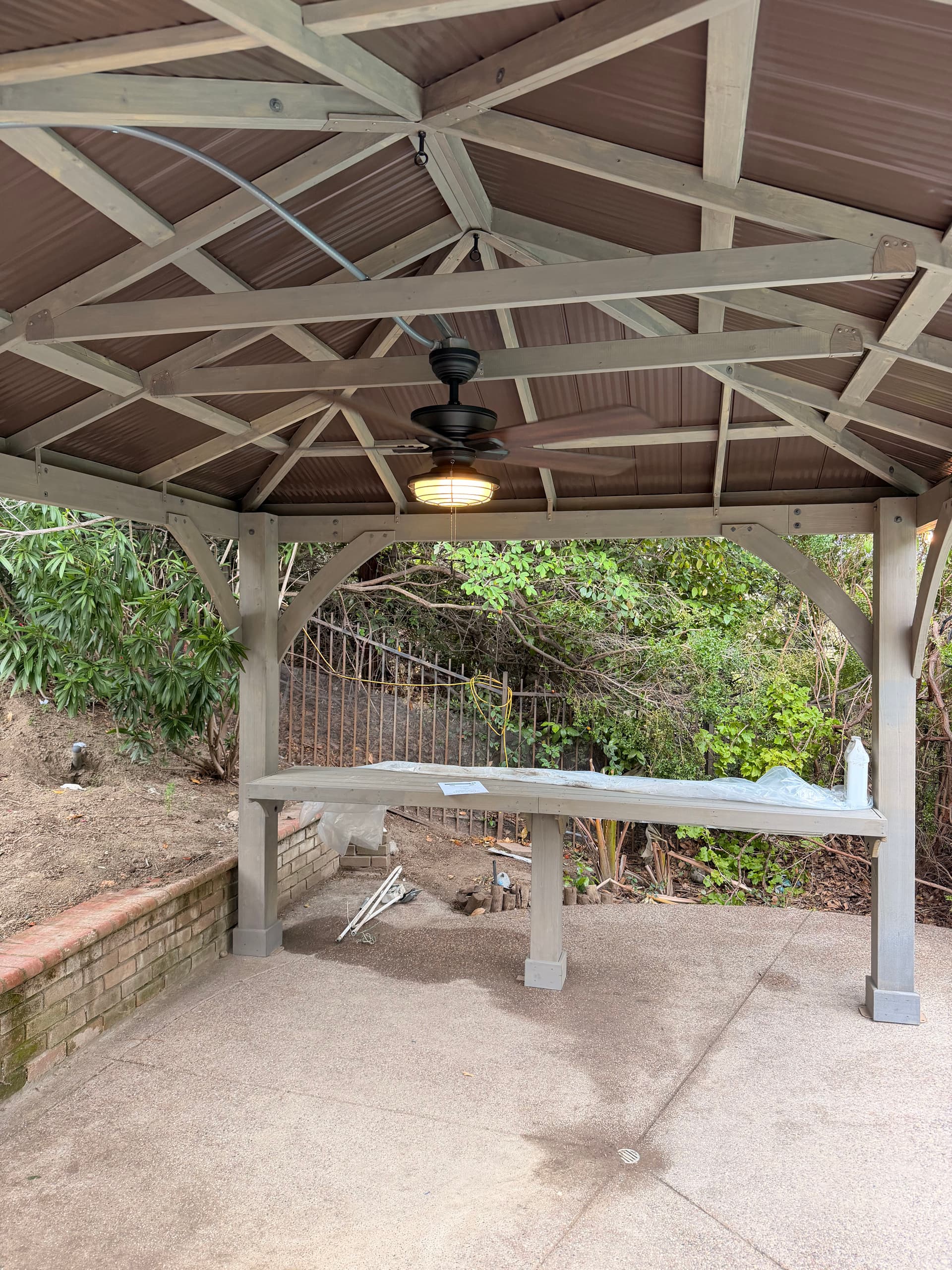
We handled two things on this one. First, we mounted a ceiling fan centered in the peak of the gazebo - a proper outdoor-rated unit with a cage-style light kit that looks sharp and moves serious air underneath the covered space. Getting the wiring run clean through that open rafter structure takes some planning. We routed the conduit tight against the ridge beam so it stays out of sight and out of the way.
Second, we ran string lights along the perimeter beam of the gazebo. The bulbs are spaced evenly and mounted to the frame using fixed clips - no zip ties, no drooping lines. The result is a warm, even glow that wraps the whole space without any harsh shadows or hot spots.
Outdoor electrical isn't the same as indoor work. Moisture, heat, and UV exposure all factor in. Every connection, mount point, and wire run has to be done with materials rated for the environment. That's not optional - it's what keeps a fixture working long-term and, more importantly, keeps everything safe next to a pool.
The difference between a backyard you walk past and one you actually spend time in usually comes down to details like this. Good light. Moving air. Work that holds up.