Heat Damage in an Electrical Panel Is a Warning Sign You Shouldn't Ignore
Most homeowners don't think about their electrical panel until something goes wrong. A tripped breaker here, a flickering light there - easy to brush off. But heat damage building up inside a panel is a different story. That's the kind of problem that doesn't announce itself until it's serious.
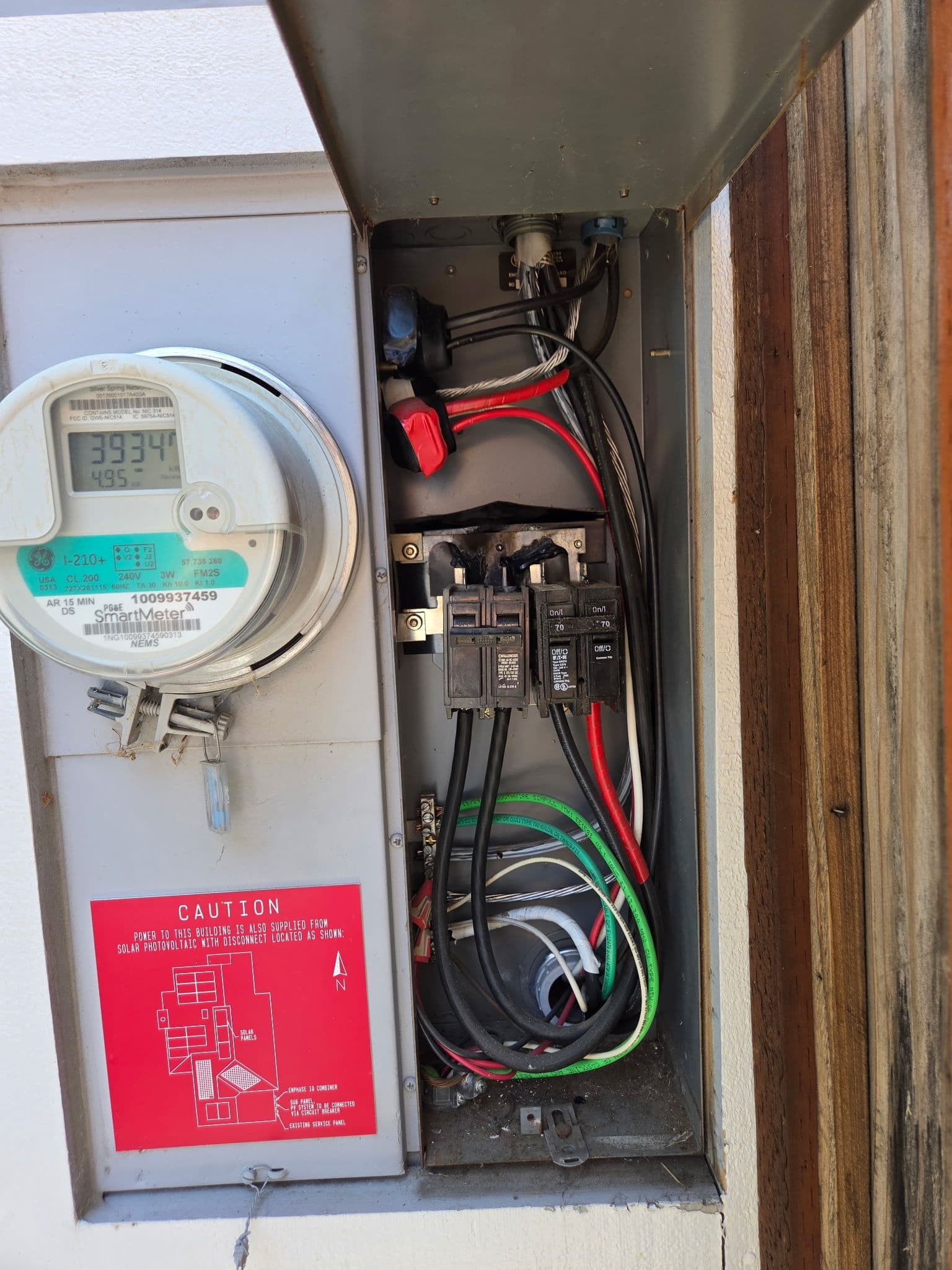
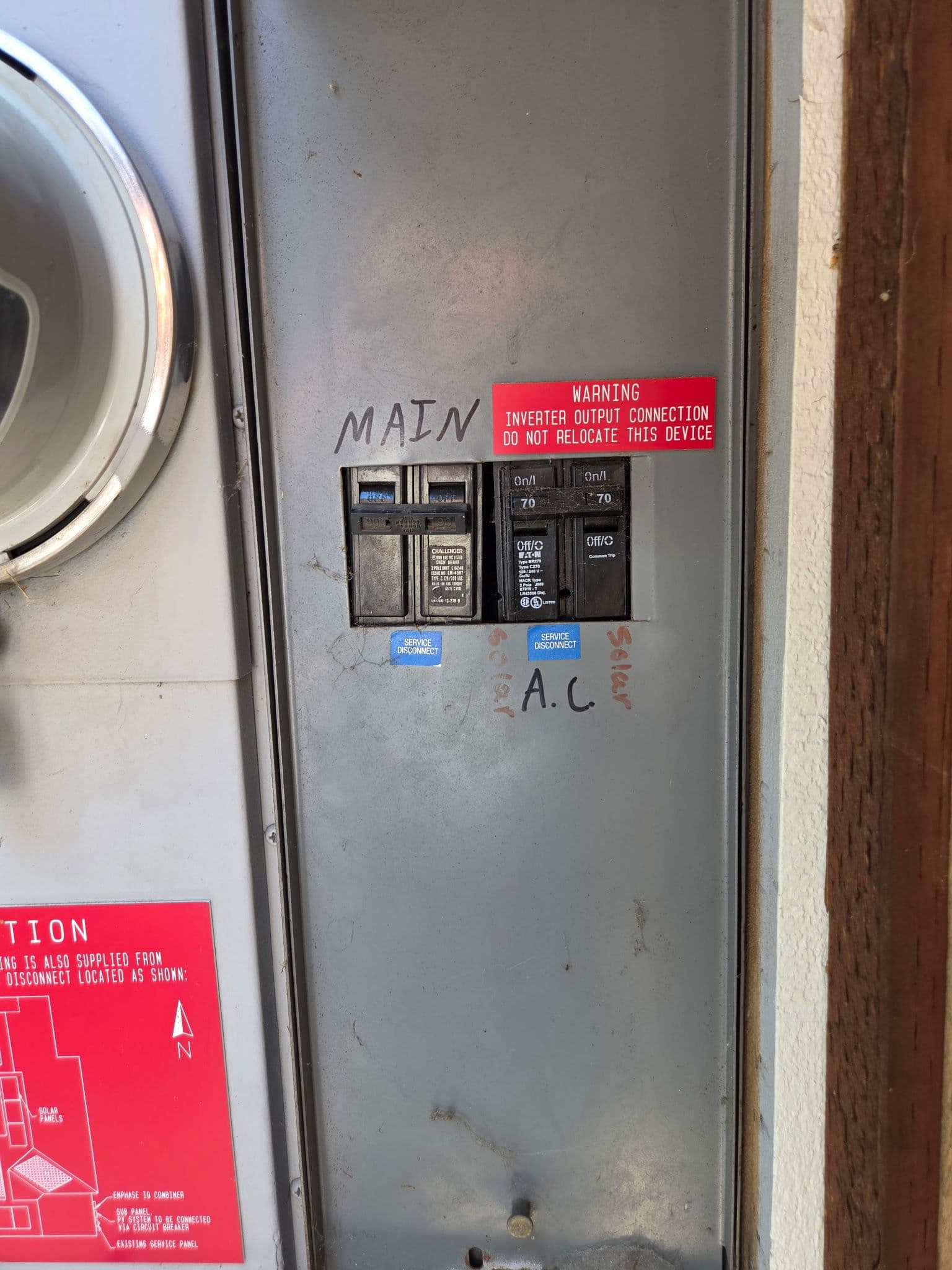
What we're looking at here is a service disconnect setup with some real concerns. The discoloration and wear visible around the breakers, combined with the layered wiring from a solar integration, creates a situation where heat buildup can go unnoticed for a long time. When you've got a main disconnect and inverter output breakers sharing a tight enclosure like this, proper inspection matters more - not less.
Heat damage inside a panel doesn't always smell like burning or show sparks. Sometimes it's subtle - slightly discolored components, breakers that feel warm to the touch, or connections that have slowly loosened over years of thermal expansion and contraction. That's exactly why a visual inspection alone won't always catch it. You need someone who knows what to look for behind the cover.
This is what our circuit breaker troubleshooting work is really about. It's not just flipping breakers back on - it's checking the whole picture. Loose lugs, scorched terminals, overcrowded wiring, signs of arcing. These are the things that can turn a manageable repair into a much bigger problem if they're left alone.
If your panel is older, has solar tied in, or just hasn't been looked at in a few years, it's worth having a professional check it out. Catching a problem early is almost always cheaper - and safer - than dealing with the aftermath of one that got away from you.