NEMA 14-50 Outlet Install for Home EV Charging
Adding a home EV charger sounds simple - plug in and go, right? Not quite. Getting it done safely means looking at your panel first, making sure there's capacity for the added load, and running a dedicated circuit that won't cause problems down the road. That's exactly what we did for this homeowner.
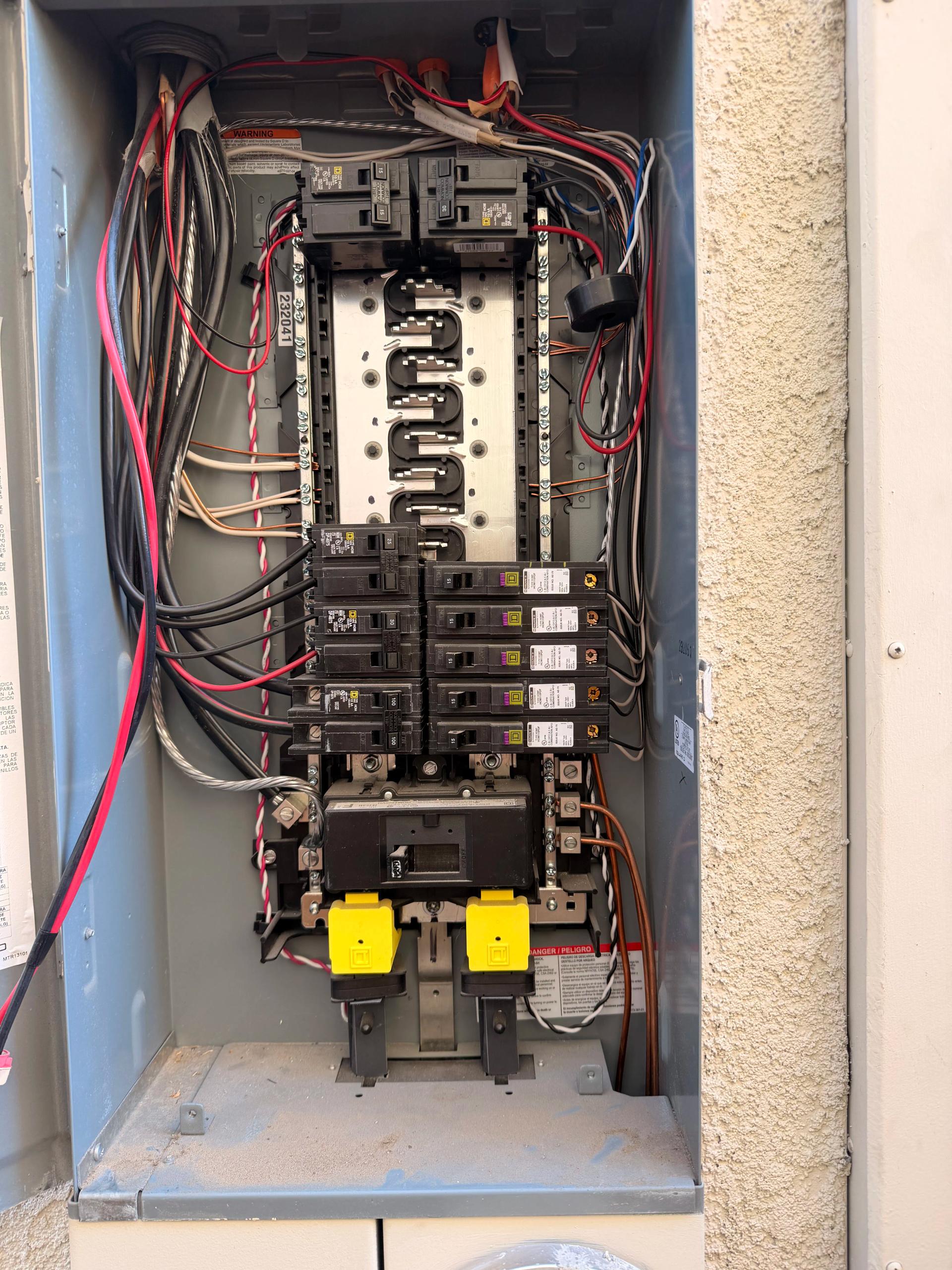
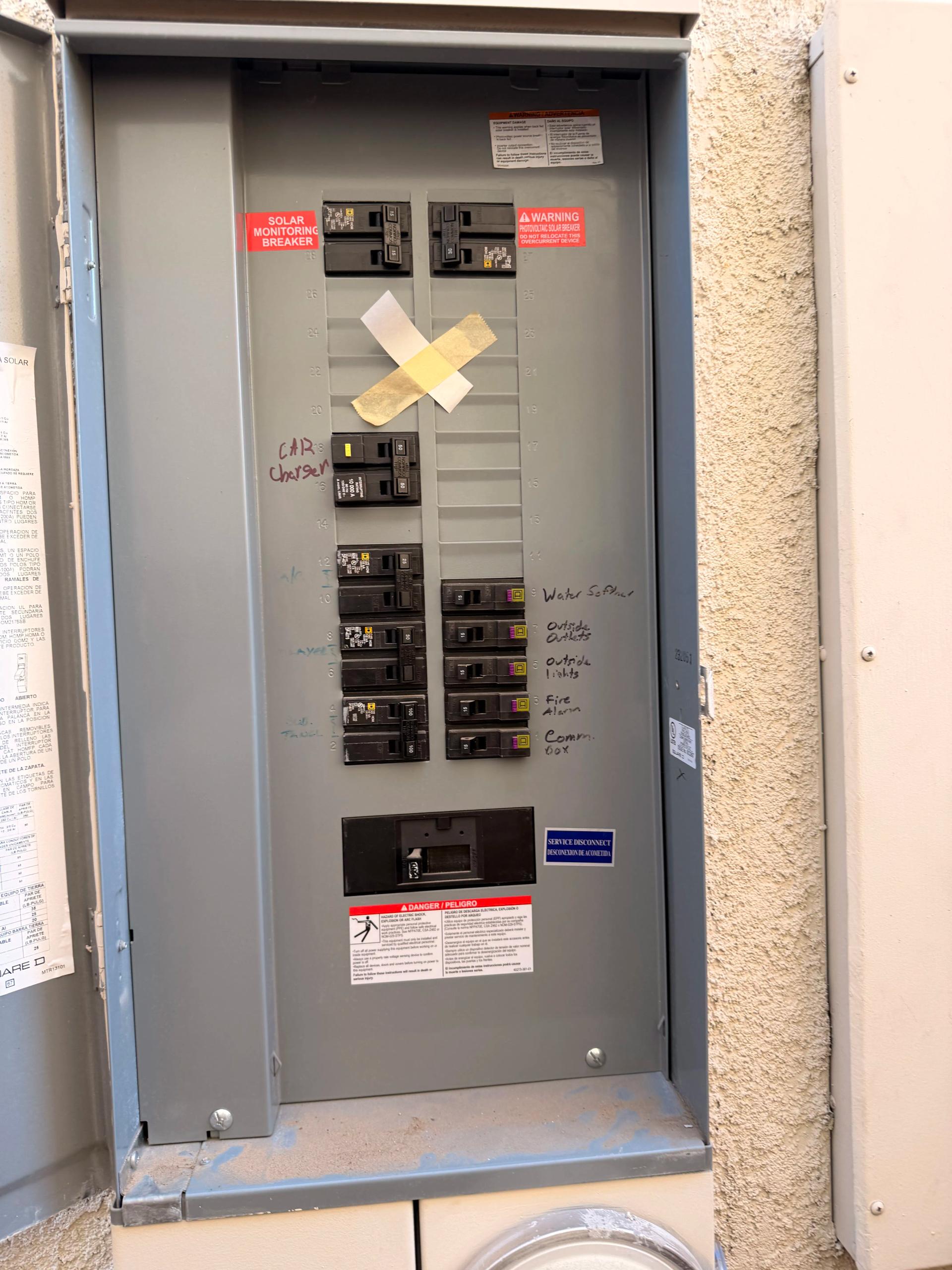
Here's what we were working with - an existing Square D panel with solar already tied in and a handful of circuits accounted for. Before we touched anything, we needed to make sure the panel could handle a dedicated 50-amp circuit for EV charging on top of everything else already running through it. Skipping that step is how you end up with nuisance tripping or worse.
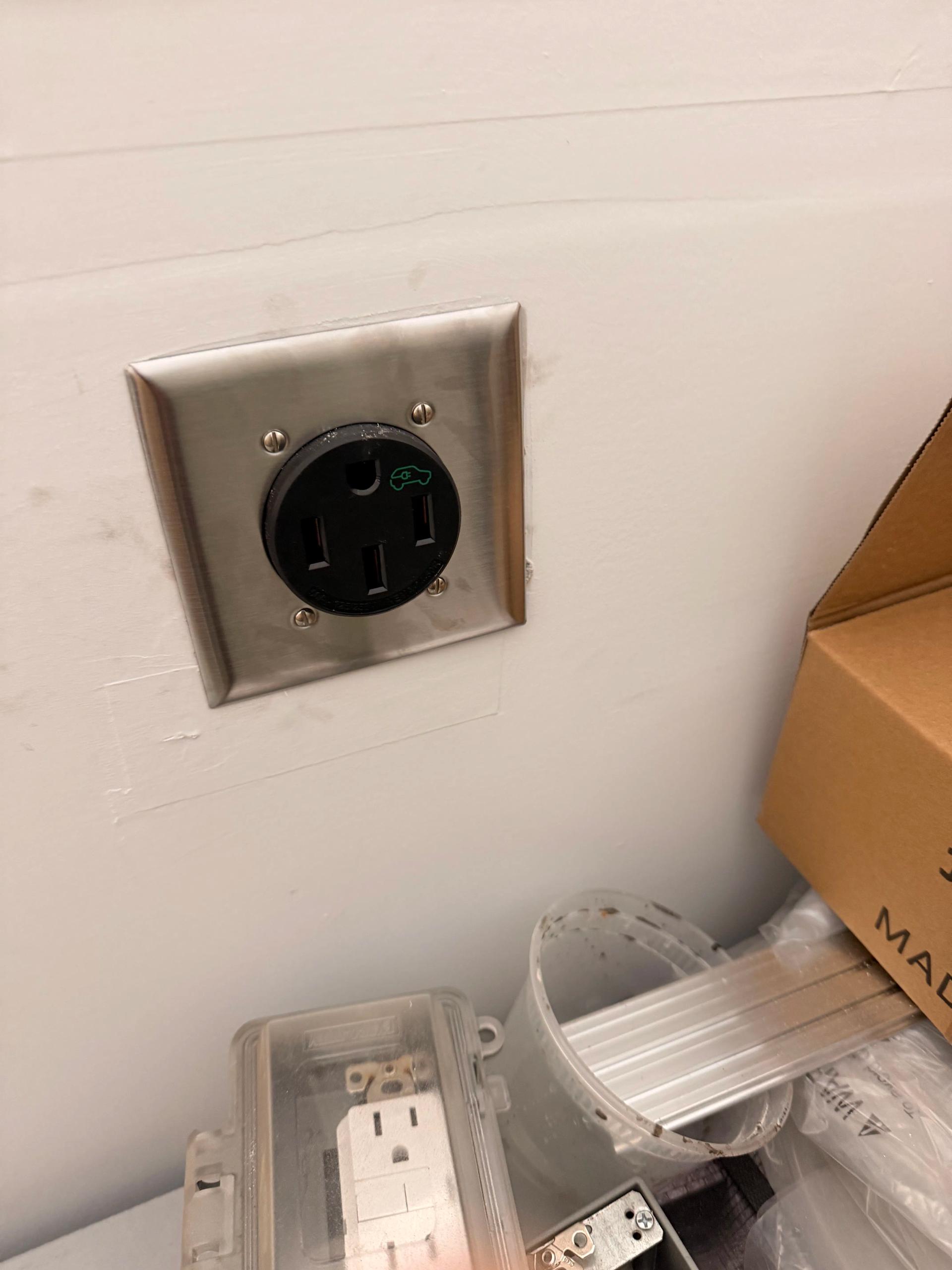
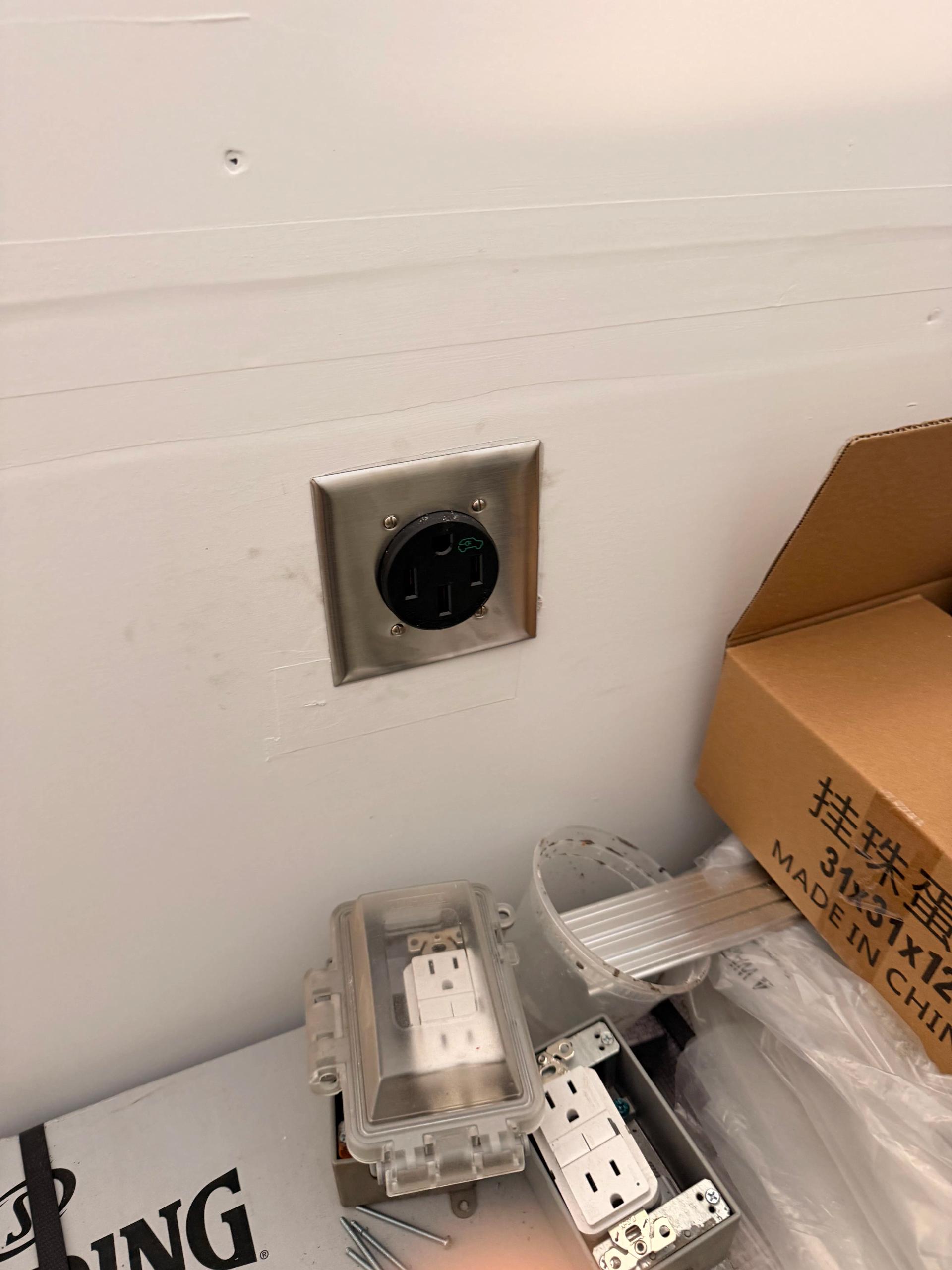
Once we confirmed the panel had room to work with, we pulled a dedicated circuit and installed a NEMA 14-50 receptacle. This is the outlet type most EV owners and Level 2 charger manufacturers recommend - it delivers 240 volts and handles the continuous load that overnight charging demands. The finished outlet sits flush on the wall with a clean stainless steel faceplate, purpose-built for the job.
A lot of people assume any outlet near the garage will do the trick. It won't. Plugging an EV into a standard household outlet is slow, and doing it on a shared circuit creates real risks. A properly installed dedicated circuit means your car charges efficiently every night and your panel stays protected. That's the whole point of doing this right.
Whether your panel needs a new circuit added or you want someone to look it over before committing to a charger, we handle the full scope - from panel evaluation to the finished outlet. No guessing, no shortcuts.